Album — Top 200

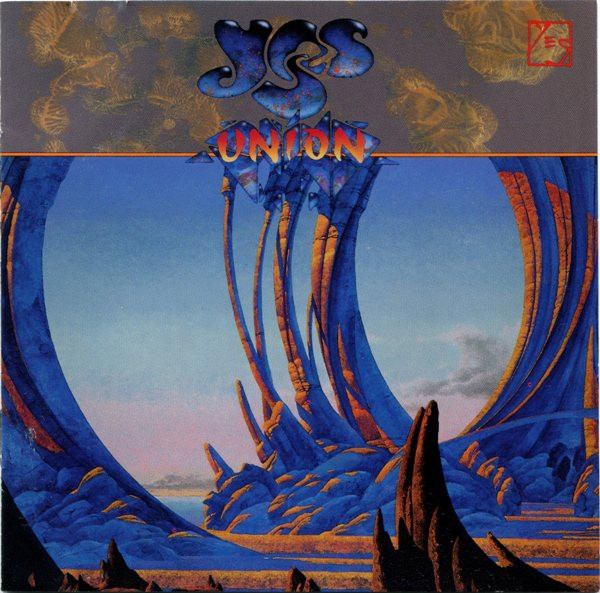
Union

Released on 30 April 1991 by Arista Records, Union stands as the thirteenth studio album by English progressive rock band Yes, capturing a uniquely convoluted chapter in the group's storied history. The project materialized following the amalgamation of two separate factions that featured previous and then-current members of the legendary lineup: Anderson Bruford Wakeman Howe, consisting of vocalist Jon Anderson, drummer Bill Bruford, keyboardist Rick Wakeman, and guitarist Steve Howe, alongside the contemporaneous incarnation of Yes comprising bassist and vocalist Chris Squire, guitarist and vocalist Trevor Rabin, keyboardist Tony Kaye, and drummer Alan White. While ABWH were already signed to Arista, the other four musicians secured permission from Atlantic Records—home to Yes since 1969—to join forces for the recording and release. At the time of this convergence, ABWH had struggled to complete a follow-up to their 1989 debut album, whereas Yes faced difficulties finalizing a successor to 1987's Big Generator as they searched for a new vocalist to replace Anderson. The resulting LP became a patchwork combination of songs drawn from both unfinished recording blocks.
The delivery of the record was fraught with friction from the outset, characterized by late-stage disagreements over the controversial merger. ABWH had already endured strained relations during the sessions for their unreleased second album, which ultimately formed the bulk of Union. Furthermore, the production team of Anderson and producer Jonathan Elias made the decisive choice to bring in session musicians to re-record instrumental parts originally completed by Wakeman and Howe, provoking deep resentment. Meanwhile, the Squire and Rabin-led iteration of Yes possessed limited written material, prompting the reworking of Rabin solo demos and a Squire-Billy Sherwood composition into official band tracks. Squire also contributed backing vocals to select ABWH songs to establish a bridging factor across the divided camps.
The recording process involved an unusually vast roster of personnel, including seven different producers, roughly 17 recording engineers and mixers, six backing singers, nine synthesizer programmers, and at least four additional contributing musicians. This made Union singular within the Yes discography for its heavy reliance on external talent, necessitating four full pages of credits in the original compact disc booklet. Nine tracks originated from the ABWH sessions across five different studios in Paris, London, Los Angeles, and New York, featuring notable contributions such as Tony Levin on Chapman Stick and fretless bass, and Steve Howe performing his acoustic guitar piece Masquerade entirely by himself at his home studio in Devon. Conversely, Yes produced four tracks, with Squire playing bass only on Lift Me Up, Saving My Heart, and Miracle of Life, while Sherwood handled bass duties on The More We Live – Let Go after Squire declined to re-record the part.
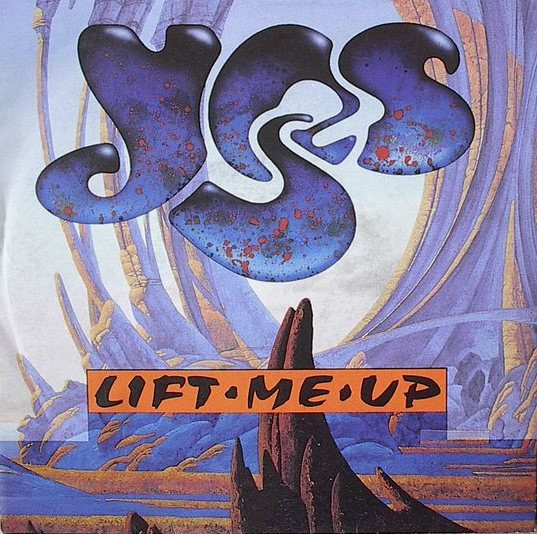
Critical reception upon release was decidedly mixed, and most members of the band subsequently expressed open dissatisfaction with the final product. Despite the internal friction and critical ambivalence, the release performed quite respectably in the commercial arena. In the United Kingdom, the album climbed to No. 7 on the charts, while in the United States, it achieved a peak position of No. 15. Within two months of its launch, Union was certified gold by the Recording Industry Association of America for surpassing sales of 500,000 copies. Promotional momentum was bolstered by the lead single Lift Me Up, which spent six weeks at number one on the Billboard Hot Mainstream Rock Tracks chart, while Howe's acoustic vignette Masquerade earned a Grammy Award nomination for Best Rock Instrumental Performance. To support the album, Yes embarked on their expansive 1991 to 1992 Around the World in 80 Dates tour, a landmark trek featuring all eight members performing on stage together. Although Wakeman and Howe eventually returned to the fold later in their careers, Union marked the final time Bill Bruford contributed to a Yes studio release.
Turning to the comprehensive chart archives of the Billboard 200, Union made its initial impact on the issue dated May 18, 1991, entering the marketplace at a respectable debut position of No. 35. The following week, on May 25, 1991, the album reached its peak rank of No. 15, which stands as its solitary week spent inside the top 20 of the survey. The title spent a total of five consecutive weeks positioned within the top 40 before beginning a gradual descent down the rankings. Over the course of its chart life, the release sustained momentum across the lower tiers of the catalog for several months, accumulating a total of 19 weeks on the chart before completing its run with an appearance at No. 195 on the week of September 21, 1991.
Last Updated: 2026-07-31

PRODUCE

BETA Producer credits are currently in beta. Self-production credits are not shown. If you find any errors, please let us know here.

Eddy Offord
Eddy Offord

Eddy Offord, an English record producer and audio engineer, established himself as a pivotal figure in the development of 1970s progressive rock. After studying physics at university, he began his studio career at London's Advision Studios. His technical expertise quickly made him an essential collaborator for several iconic acts of the era. Notably, he formed a significant working relationship with Emerson, Lake & Palmer, contributing engineering work to their first four albums. The band held his work in such high regard that they honored him with the tribute track Are You Ready, Eddy? on their 1971 release, Tarkus. Offord is perhaps best known for his long-standing and complex production partnership with the band Yes. His involvement with the group was instrumental in defining their sound during their most experimental years. He helped guide the production of foundational records such as The Yes Album and Fragile. His collaboration with the band was notoriously intense, with Offord famously describing the experience of producing the group as akin to managing five individual producers. His tenure with the band included working on later efforts like the 1980 release Drama and tracks for the 1991 Union album. Furthermore, his association with Yes guitarist Steve Howe extended beyond the band, as Offord produced Howe’s solo project Beginnings. In addition to his progressive rock legacy, Offord applied his production sensibilities to a wide range of musical styles throughout his career. His production resume includes work with Billy Squier on Tale of the Tape and Blackfoot on the album Vertical Smile. In the early 1980s, he co-produced the Dixie Dregs album Industry Standard alongside Steve Morse. As the industry evolved, Offord transitioned into new sounds, famously producing the 1994 album Grassroots for the band 311. Following an announcement of his retirement from the music business in 1994, Offord remained largely inactive until 2011, when he returned to produce a debut project for the group The Midnight Moan. Throughout his career, Offord’s work was frequently represented in archival collections and retrospective sets, including his contributions to the compilations Greatest Hits '93-'03 by 311, Yesterdays by Yes, and The Ultimate Yes: 35th Anniversary Collection. His legacy remains tied to his ability to translate the dense, technical compositions of his era into polished, high-fidelity studio productions.

more
Mark Mancina
Mark Mancina

Mark Mancina is an American composer and producer who has built a distinguished career balancing high-stakes Hollywood film scoring with significant contributions to rock music and musical theater. Born in 1957 and trained as a classical guitarist, Mancina emerged from the ranks of Hans Zimmer’s Media Ventures organization to become a prolific force in the industry. Mancina’s production work in the rock genre includes collaborations with legendary progressive acts. In 1991, he contributed to the Yes album Union, followed by his work as a co-producer on the 1992 Emerson, Lake and Palmer album Black Moon, a project for which he also composed the song Burning Bridges. His connection to major pop artists is further exemplified by his production credits on the Phil Collins collection The Singles. The producer has maintained a long-standing and creatively fruitful relationship with The Walt Disney Company. His involvement with the studio spans multiple high-profile projects, most notably his work on the soundtrack for the original animated classic The Lion King, as well as the later studio production The Lion King: Rhythm of the Pride Lands. Beyond the studio recordings, his influence reached the stage when he produced the album for the Original Broadway Cast of The Lion King, a feat that earned him a Grammy Award for Best Musical Show Album and a Tony Award nomination for Best Original Score in a Musical. Mancina’s film work is extensive, often intersecting with his production efforts. He served as a producer on the soundtrack for the action hit Bad Boys and collaborated closely with Phil Collins on the music for the animated feature Tarzan, a project that resulted in a Grammy Award for Best Soundtrack Album. His work remains a staple of the Disney legacy, as evidenced by his production credits for the soundtracks to Moana and Moana 2. Throughout his career, Mancina has demonstrated a versatile range that extends from the high-octane scores of action films like Speed and Twister to the nuanced storytelling of animated features such as Brother Bear. A collector of rare instruments and an accomplished musician, he continues to leave a distinct sonic imprint on both the screen and the stage.

more

CHART SPECIFICATION

Peak
Debut
Final
#195 Sep 21, 1991

CHART ACTION

Ticketmaster

Tickets on sale

Yes concert tickets are on sale.

  • YES - The Fragile Tour - Venue Premium Tickets Sat, May 15, 2027 York Barbican · York
  • YES - The Fragile Tour Sat, May 15, 2027 York Barbican · York
Get tickets · 2 dates

We may earn a commission from Ticketmaster. Availability and checkout are on Ticketmaster.

Event details are subject to change and may not be current. Always confirm dates, times, and ticket availability on the official promoter or Ticketmaster page. Listings may include tribute shows, cover bands, or other unofficial events that the artist is not performing. Confirm the lineup and event details on each Ticketmaster page before you buy.

SINGLE DISCOGRAPHY