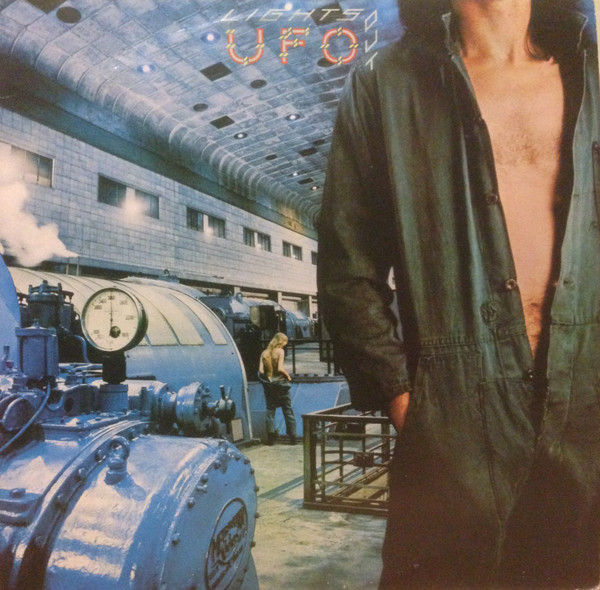
Released in 1977, Lights Out stands as the sixth studio album by the English rock band UFO and remains a definitive landmark in the group's discography. It served as a critical evolution for the band, marking the first appearance of keyboardist and rhythm guitarist Paul Raymond, whose presence helped pivot the band toward more sophisticated compositions. Under the production guidance of Ron Nevison, the group experimented with expanded textures, famously incorporating lush string and horn arrangements by Alan McMillan. These orchestral elements were most prominently showcased on Love to Love, a track that would go on to be regarded as one of the band's most significant achievements.
Beyond the addition of Raymond, Lights Out was noted for a newfound complexity in song structure that balanced the band's established hard rock intensity with broader melodic appeal. As Classic Rock Magazine later observed, there was an almost telepathic link between melody and brawn present throughout the recording. While the band remained committed to their own original songwriting, they did include one notable interpretation, covering the song Alone Again Or, originally by the band Love. The visual presentation of the record, featuring cover design and photography by the renowned agency Hipgnosis, solidified the album's status as a quintessential 1970s hard rock release.
The legacy of Lights Out has only grown in the decades since its release. It is frequently cited by critics and peers alike as a high-water mark for the hard rock genre, with Kerrang! magazine placing it at number 28 on their list of the 100 Greatest Heavy Metal Albums of All Time. Its influence on subsequent generations of musicians is profound; Iron Maiden bassist Steve Harris famously identified Love to Love as his favorite song. Quireboys guitarist Guy Griffin echoed this sentiment, noting the majesty and world-class construction of the track, which has since been covered by acts such as Europe on their live album Almost Unplugged. The album's material has also permeated popular culture, with the title track and Love to Love appearing in the 1999 film Detroit Rock City, while an instrumental version of the anthem Too Hot to Handle has become a recurring musical signature on Pittsburgh radio. In 2021, Classic Rock Magazine reaffirmed the album's historical importance, stating that it established a blueprint that influenced a vast array of bands throughout the following decade.
In the United States, Lights Out achieved significant commercial milestones that eclipsed the band's previous efforts. The album made its debut on the Billboard 200 on June 11, 1977, entering the chart at rank 151. From that entry point, the record demonstrated steady, impressive momentum, climbing consistently through the summer months. By mid-July, the album had broken into the top 50, and it continued to show resilience as it steadily ascended toward the upper echelons of the chart.
The album reached its peak performance on the issue dated October 1, 1977, securing the number 23 position on the Billboard 200. This achievement marks the highest chart placement ever attained by a UFO album in the United States. Lights Out maintained a strong presence in the market, spending a total of 24 weeks on the Billboard 200, with 12 of those weeks spent within the top 40. Following its peak, the album maintained its position for a second week before beginning its eventual descent through the chart rankings. Throughout its tenure on the Billboard 200, the album served as the band's breakout success in the American market, cementing its status as an essential release in the annals of hard rock history. In the United Kingdom, the album achieved a peak position of number 54, maintaining a presence on the chart for two weeks. Through various reissues, including a 1994 BGO Records CD pairing it with No Heavy Petting and an EMI remastered edition in 2008 that corrected historical inaccuracies regarding live tracks recorded at The Roundhouse in 1977, Lights Out remains a widely celebrated and studied work in the UFO catalog.
Last Updated: 2026-07-23